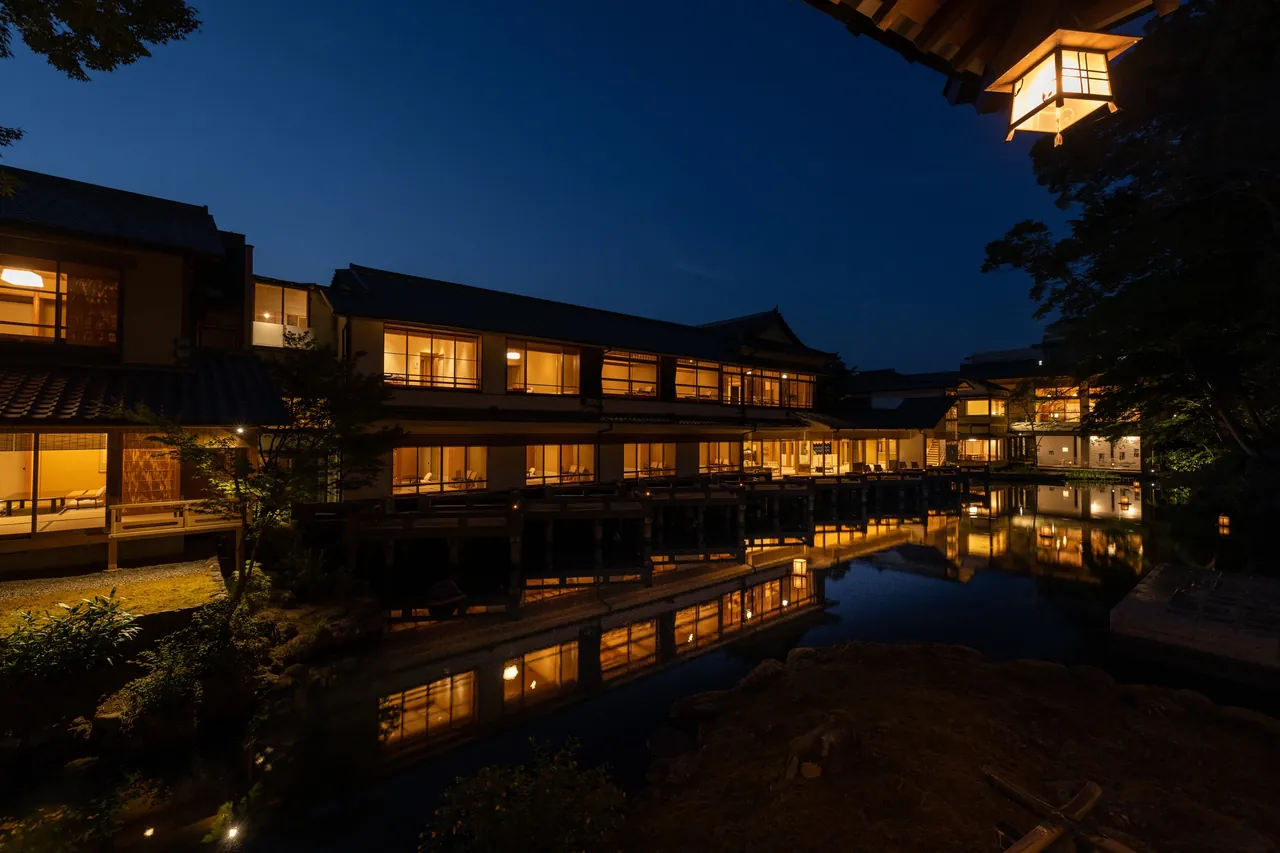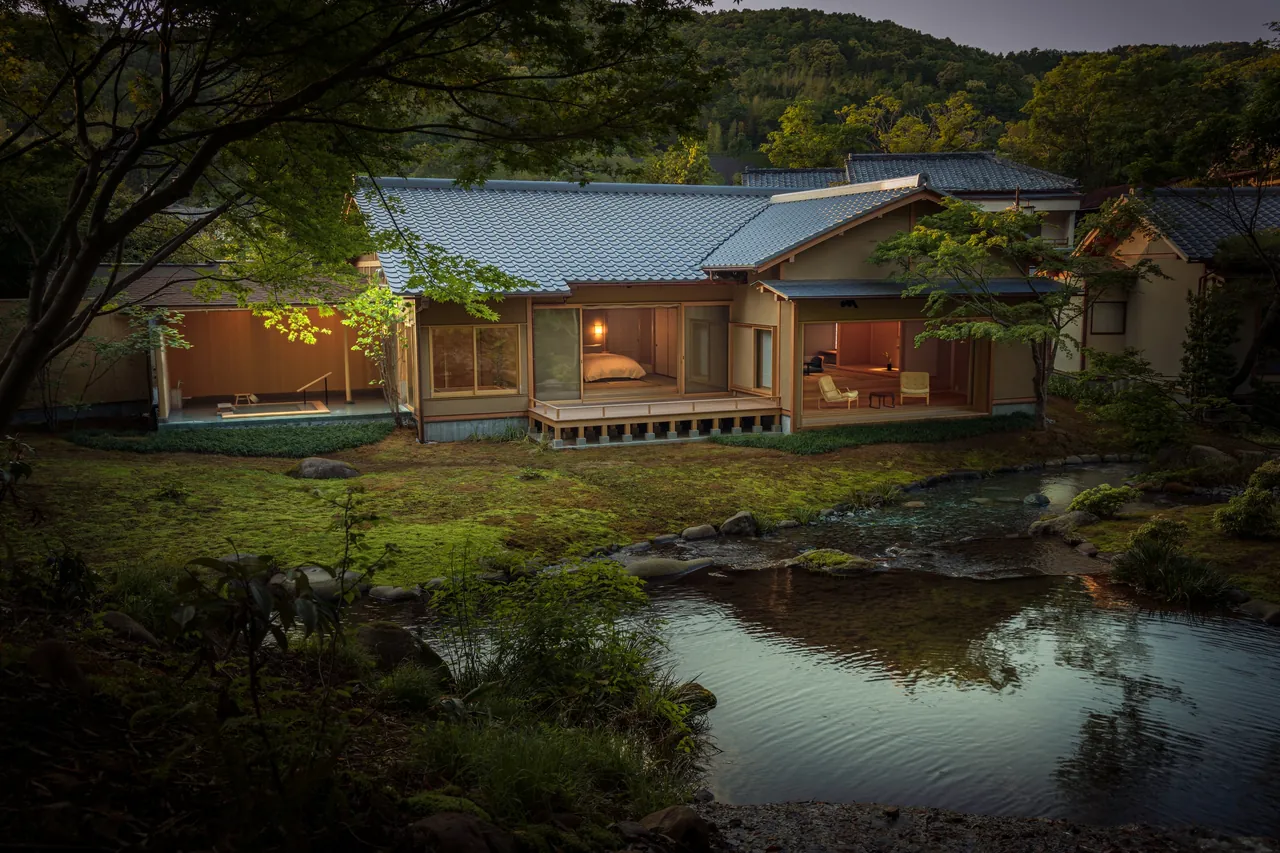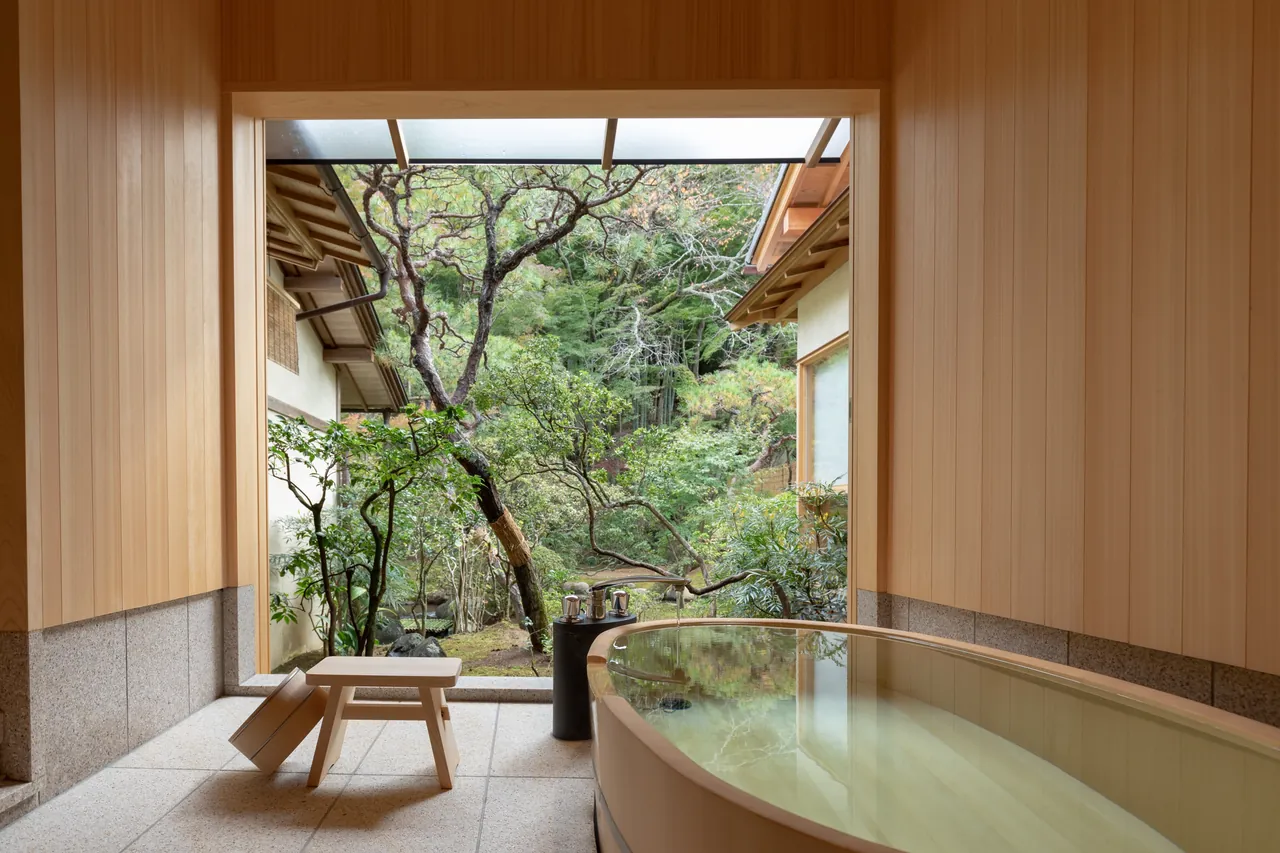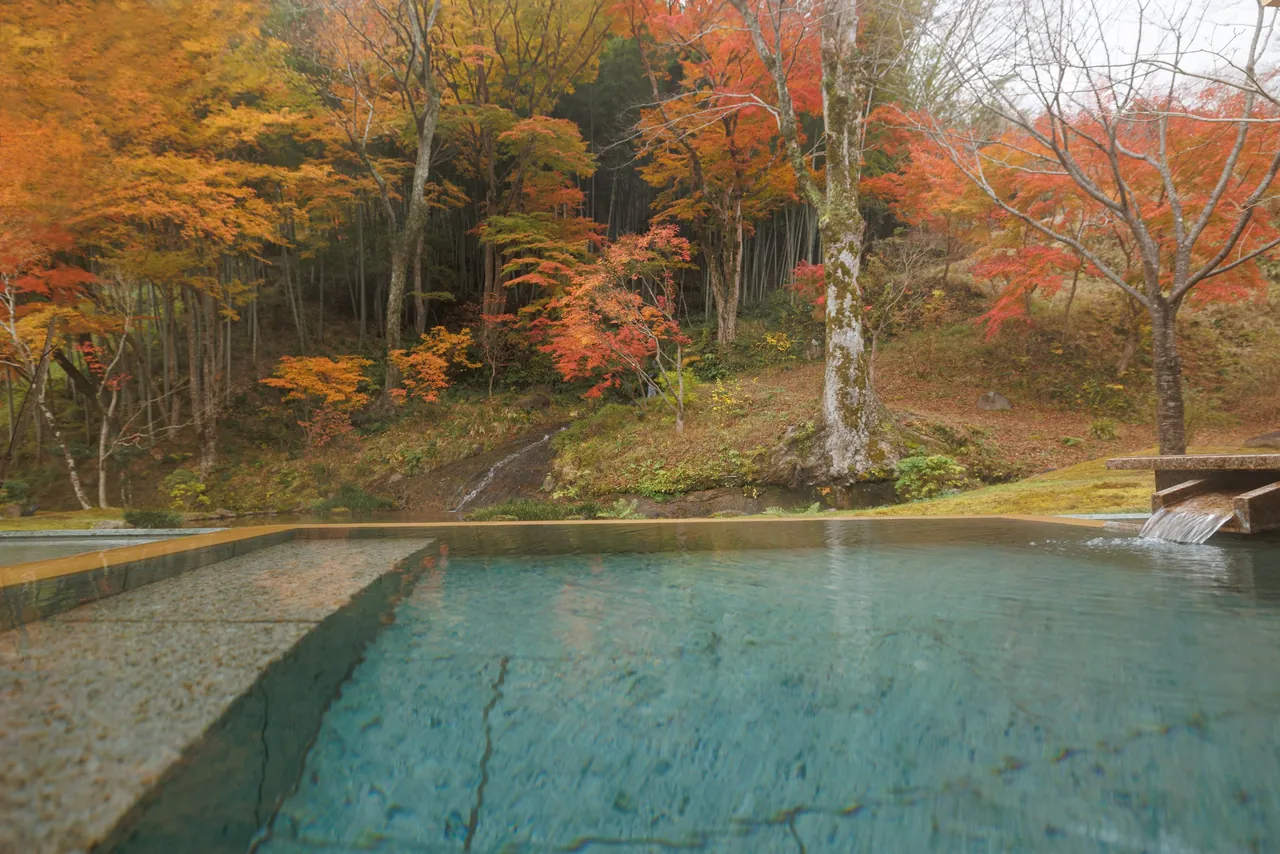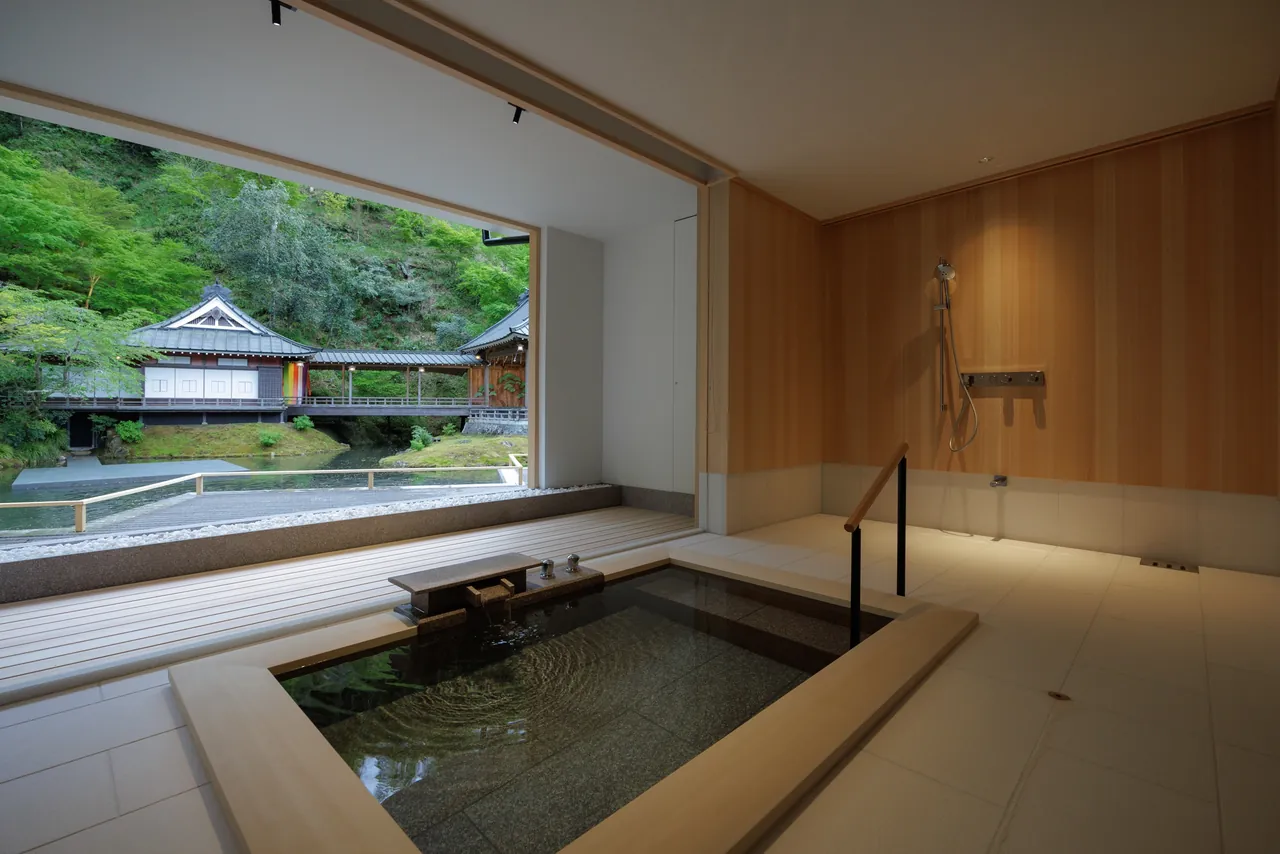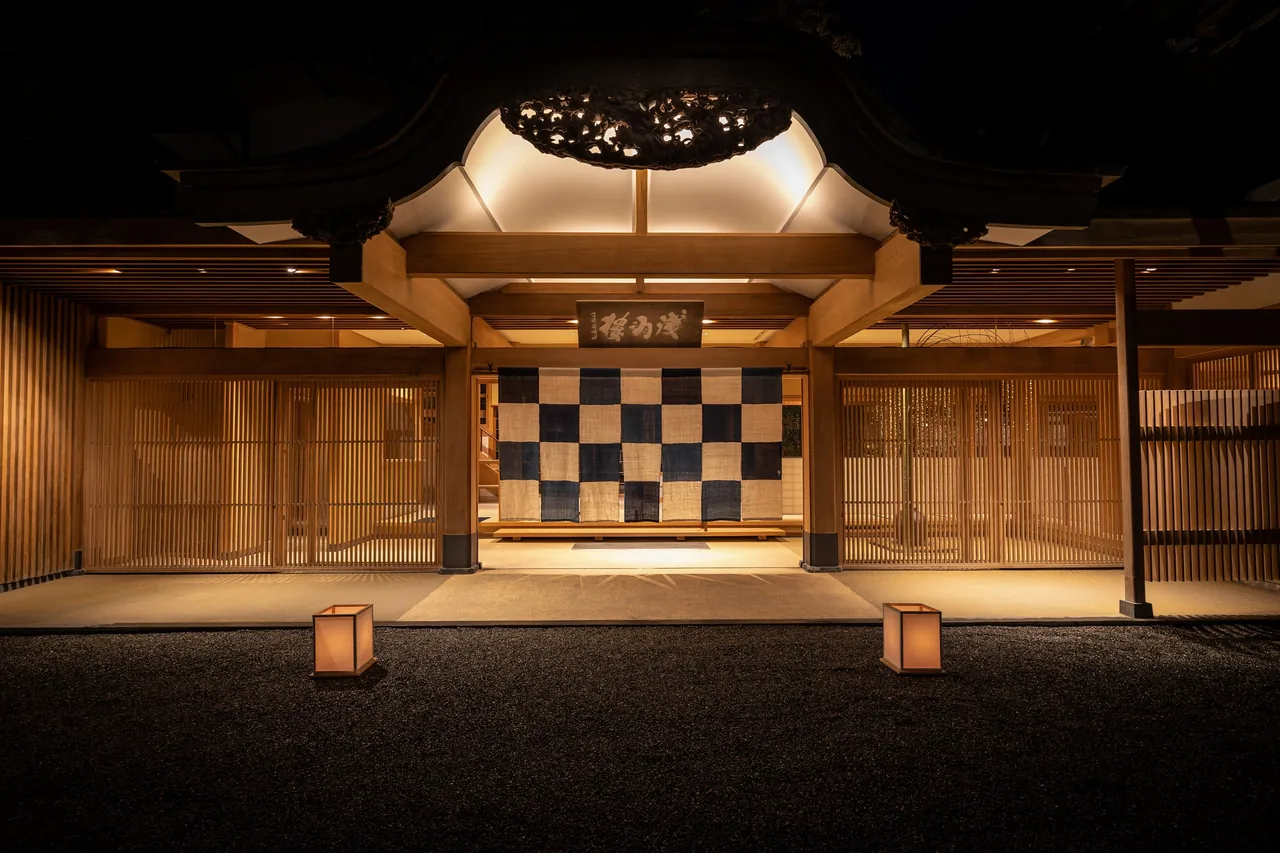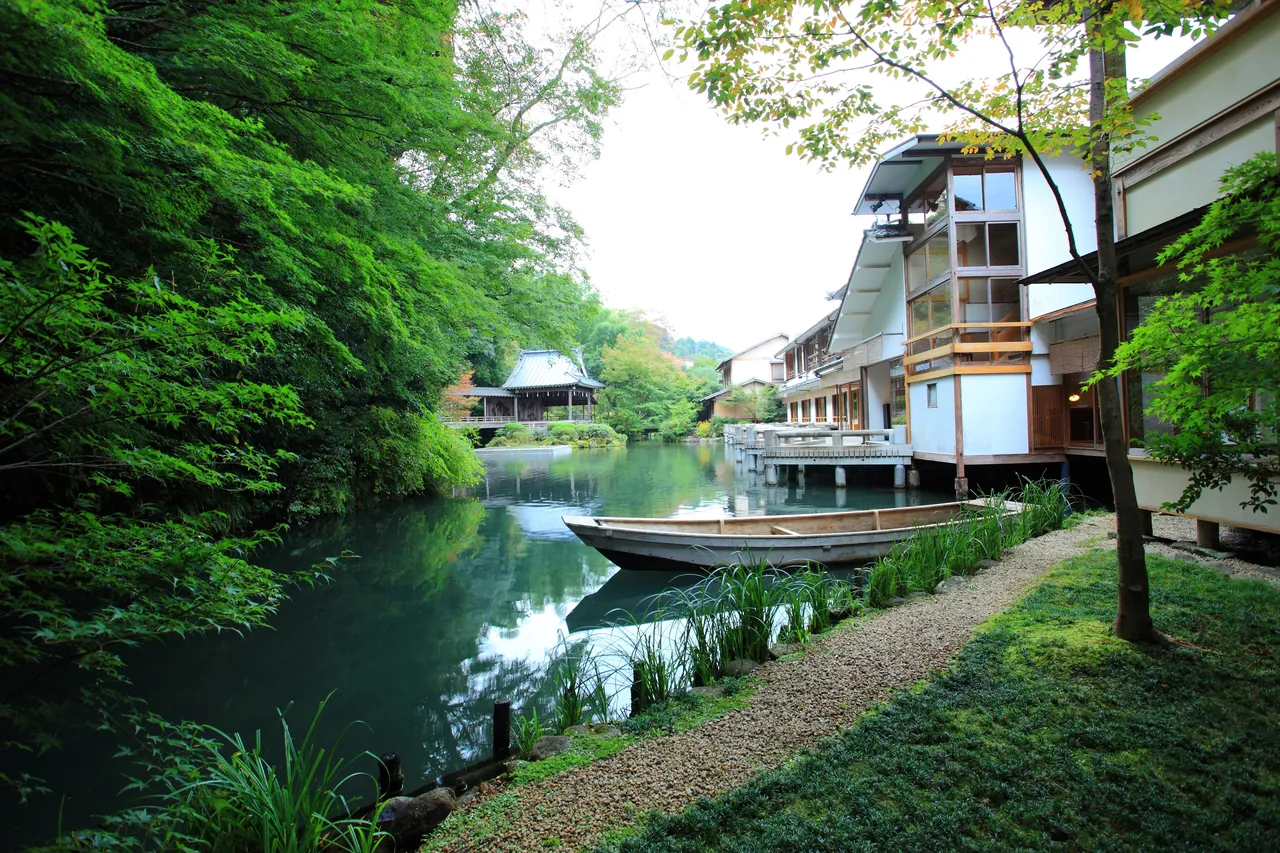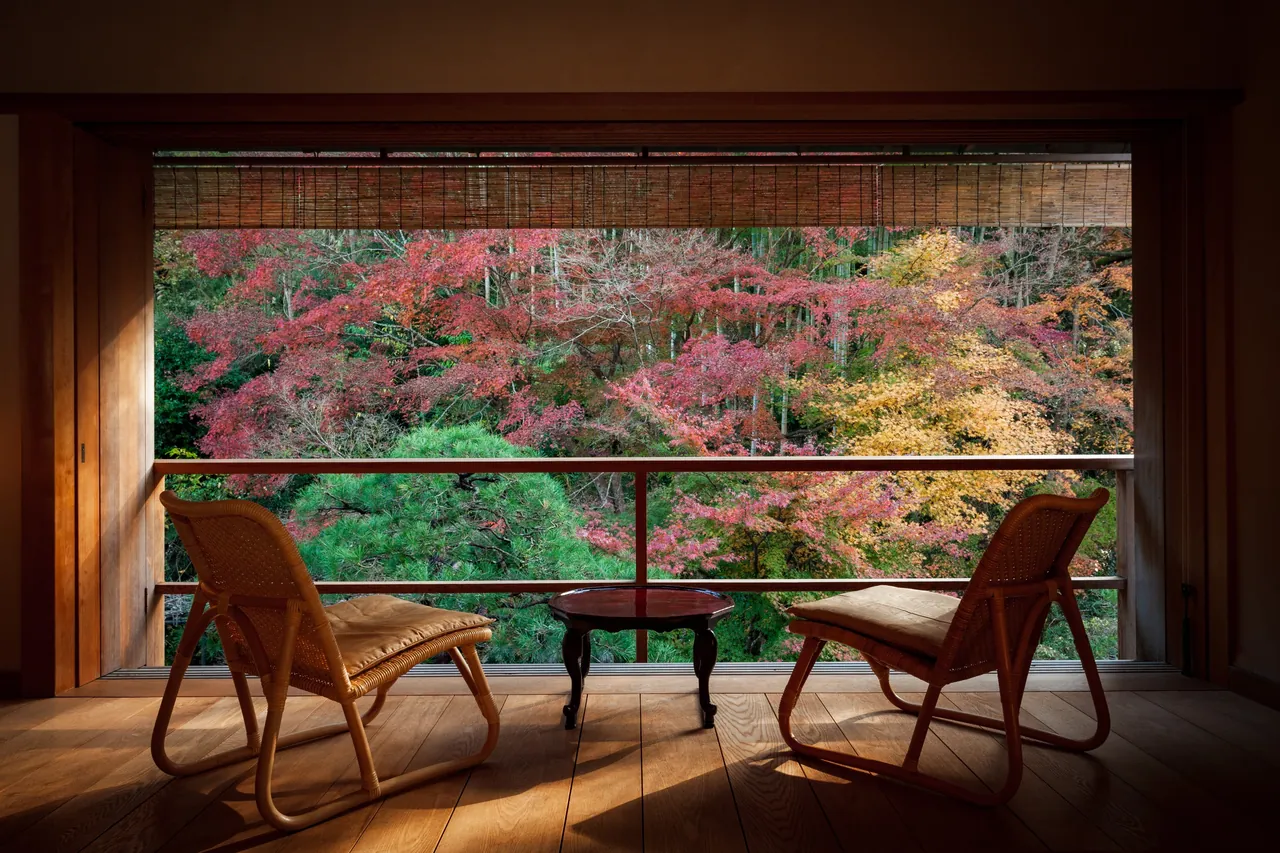
Asaba was founded in 1484, when Yakuro Yukitada Asaba came to Shuzenji to help establish the Soto Zen temple and opened a lodging house before its gate. The ryokan has passed through the Asaba family for more than five centuries. Its spare tatami rooms face a still pond ringed with bamboo, in the middle of which floats the Gekkeiden, a Noh stage given by Viscount Toshika Maeda and moved from Tomioka Hachimangu shrine in Fukagawa, Tokyo, in the late Meiji period by the seventh-generation owner. For some 40 years Asaba has held the Asaba Cultural Journey, seasonal performances of Noh, kyogen, shinnai and dance by masters and Living National Treasures. The kitchen is its other signature. Dinner and breakfast are served in the room by a private server, with ingredients from the foothills of Mount Fuji, Suruga Bay, the Kano River and the Amagi mountains, and seasonal additions such as black abalone, Ise lobster and matsutake. Water from the Shuzenji hot spring runs through the baths, and rooms have their own hot spring tubs, some in koyamaki pine. After a renovation, Asaba reopens in stages, with eight rooms from October 2026 and 11 in all from January 2027, and the ryokan holds Three MICHELIN Keys.
- Nearest airport
- Tokyo Haneda Airport (HND), 62 Miles / 101 Kilometres
- Rooms
- Eight rooms from the October 2026 reopening; 11 in all from January 2027
Insider tip Ask for the Hagoromo suite, whose half-open-air bath of koyamaki pine looks from the veranda onto the floating Noh stage and the pond.
Why I choose it In-room kaiseki from Mount Fuji, Suruga Bay and the Izu hills, served beside a floating Noh stage in a ryokan founded in 1484.